


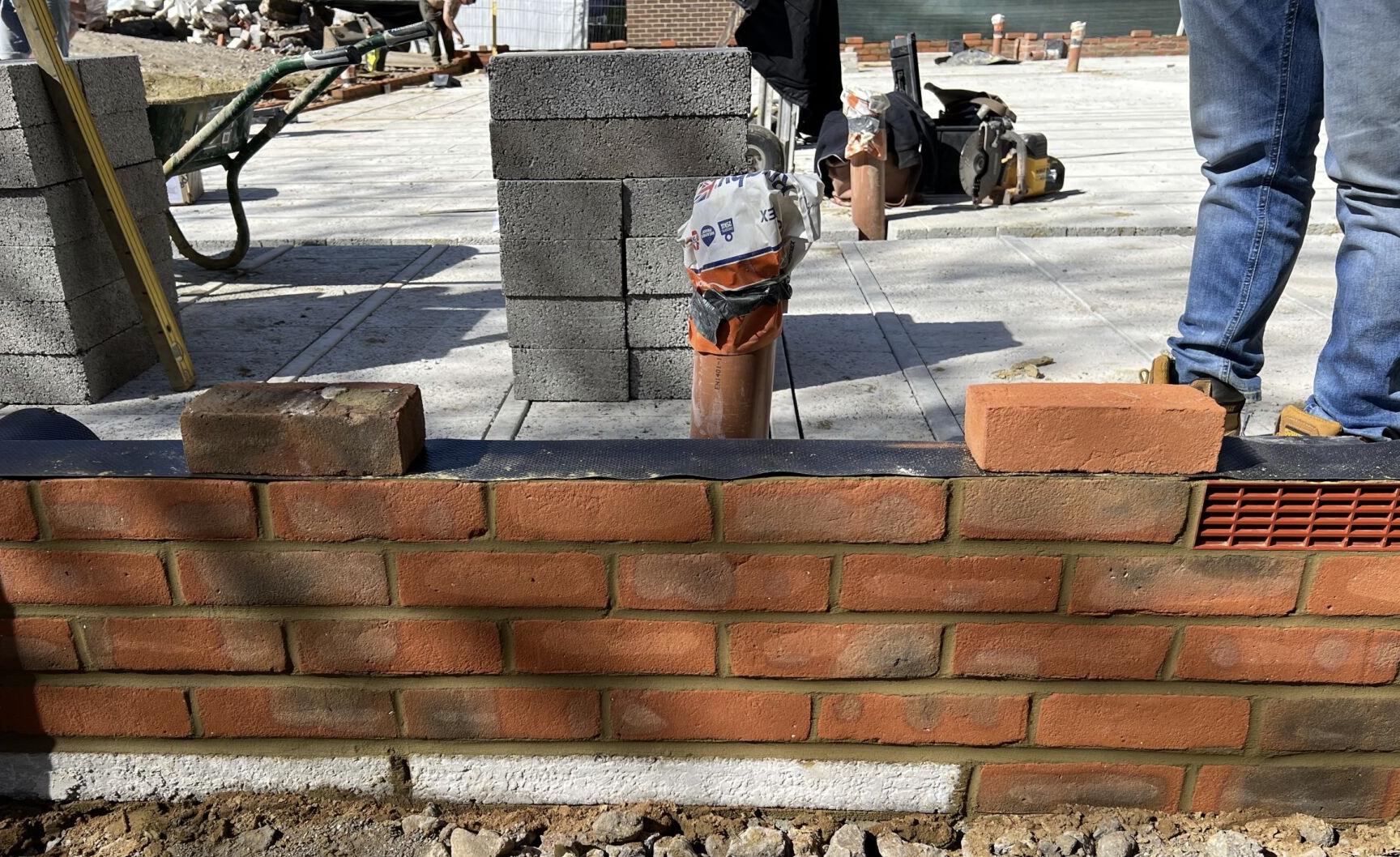
06 Jan The Foundation of Quiet: Why Beam and Block is the Gold Standard for Luxury Homes
When designing a bespoke residence, the focus is often on the visible: the sweep of a marble staircase, the orientation of floor-to-ceiling glazing, or the integration of a designer kitchen. However, the true measure of a residence’s quality is often found in what you can’t hear and what you can’t feel—the structural “bones” of the building.
One of the most pivotal decisions in the early stages of a build is the construction of the first and second-floor build-ups. While standard timber joists are the industry norm for residential projects, those looking to create a truly superior living environment look toward beam and block construction.
Why Beam and Block is the Gold Standard for Luxury Homes
In a sprawling, multi-story home, privacy and silence are the ultimate luxuries. Traditional timber floors, while functional, are prone to “impact noise”—the sound of footsteps or muffled voices traveling between levels. Choosing a masonry-based floor system for your upper levels offers distinct advantages that define a premium home:
-
Superior Soundproofing: The mass of concrete beams and blocks acts as a natural acoustic barrier. It creates a dense barrier that drastically reduces sound transmission, ensuring the master suite remains a sanctuary even if the floors above are active.
-
Unmatched Solidity: Unlike wood, which can expand, contract, and eventually creak over time, beam and block provides a rock-solid, vibration-free surface. There is no “bounce” underfoot; the house feels as permanent on the top floor as it does on the ground level.
-
Thermal Efficiency & Heating: For homes utilizing underfloor heating (UFH)—a staple in modern high-end design—concrete is the superior partner. It acts as a “thermal store,” retaining and radiating heat more consistently than timber, providing that gentle, even warmth that characterizes a well-engineered climate.

Old Beaconsfield Road Hallway
Beyond Sound: The Hidden Structural Benefits
While comfort is the primary driver, beam and block provides several technical advantages that suit high-specification architecture:
1. Enabling Open-Plan Grandeur
Luxury design often calls for vast, open-plan spaces on the ground floor. Because beam and block floors are incredibly strong, they can often achieve longer spans with fewer intrusive internal load-bearing walls or pillars. This allows for the “seamless flow” that defines modern architecture.
2. Enhanced Fire Resilience
Safety is a quiet but essential luxury. Masonry construction offers significantly higher fire resistance than traditional timber. In a large-scale home, this provides invaluable peace of mind and can even lead to more favorable insurance terms for high-value properties.
3. Longevity and Maintenance
A timber floor is organic; it can be affected by damp, rot, or pests over many decades. A beam and block floor is virtually inert. It won’t warp or degrade, ensuring that your stone or hardwood floor finishes remain perfectly level and crack-free for the lifetime of the building.
The “200mm” Rule: Designing with Foresight
Opting for this level of structural integrity requires foresight during the architectural phase. A beam and block system, along with the necessary screed and insulation for UFH, is significantly deeper than a standard timber joist setup.
As noted in our recent video, you must account for an additional 200mm of depth per floor.
A Note on Proportions: In a premium build, volume and ceiling height are everything. If this extra 200mm isn’t accounted for in the initial planning of the building’s envelope, you risk compromising your internal ceiling heights. To maintain a grand, airy feel, ensure your architect adjusts the overall wall heights to accommodate the floor’s “build-up” from the start.
A Solid Investment
While the structural requirements for masonry floors are higher, the return is found in the quality of life. A home that stays silent between floors, remains thermally efficient, and feels like a fortress underfoot is a home that truly embodies luxury.
If you are currently in the planning stages of your new build, now is the time to discuss floor build-up with your structural engineer to ensure your home’s performance matches its aesthetic.
Sorry, the comment form is closed at this time.